
Why Choose OnSite Health as Your Partner?
OnSite Health helps employers reduce healthcare costs, improve productivity, and create a healthier, safer workplace. Through customized on-site health services, we help organizations support their employees while simplifying operations and improving long-term outcomes.
Why OnSite Health?
Financial Savings
- Reduce emergency room, urgent care, and unnecessary specialist visits through convenient on-site access.
- Lower unit costs for primary care, labs, screenings, and medications (where applicable) compared with external networks.
- Cut workers’ compensation costs through immediate injury triage, fewer recordables, and faster return-to-work.
- Consolidate multiple outside vendors (screenings, vaccinations, fit testing, first aid support) into one cost-effective partner.
- Deliver direct claims savings for self-insured employers and support more favorable claims experience and renewal leverage for fully insured employers.
Employee Benefits, Recruitment
& Retention
- Provide a high-value workplace benefit that improves employee satisfaction and engagement.
- Strengthen talent attraction and retention with convenient, low-friction access to care (a competitive advantage in tight labor markets).
- Increase participation in preventive care, biometrics, vaccinations, and health coaching because services are available on campus.
- Support both self-insured and fully insured plans without requiring cuts to benefits or higher employee cost-sharing.
Productivity & Operational Efficiency
- Minimize time away from work—employees receive care, screenings, or treatment without leaving campus.
- Reduce absenteeism and presenteeism by addressing health issues early and managing chronic conditions proactively.
- Support day-to-day operations with on-site triage, first-aid capability, and safety coordination that keeps people working.
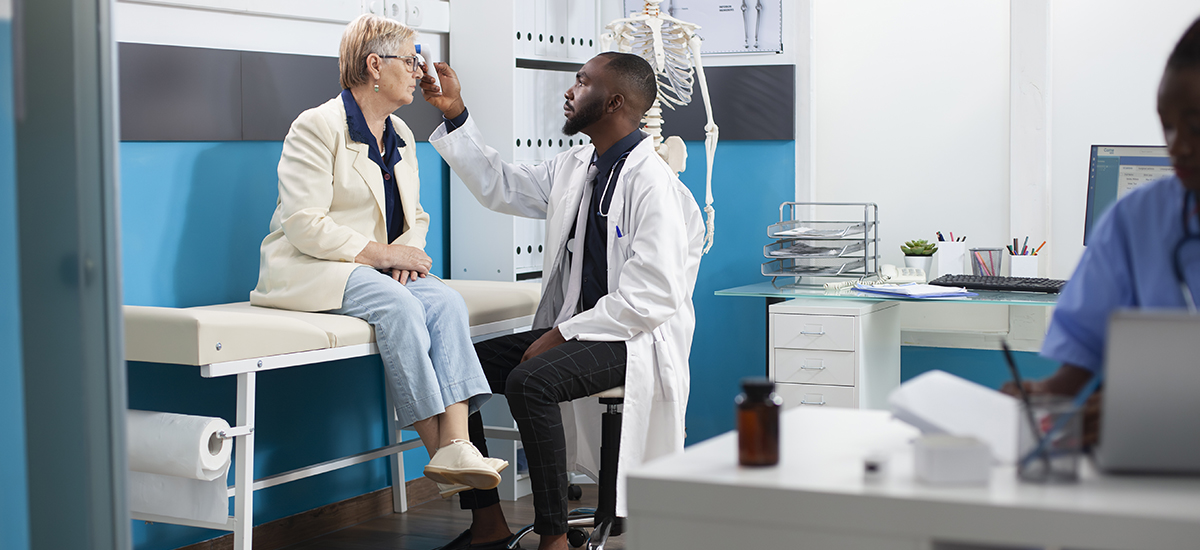
Safety, Compliance & Occupational Health
- Deliver immediate triage of workplace injuries and illnesses to reduce recordables and external clinic trips.
- Provide ergonomic assessments, screenings, OSHA-related support (respirator fit testing, medical surveillance, bloodborne pathogen programs), and emergency response coordination.
- Streamline return-to-work, workers’ compensation, FMLA, and short-term disability processes with clinical support.
- Note: A primary care clinic includes all occupational nursing services and benefits, plus full primary care capabilities (diagnosis, prescribing, chronic disease management, labs, and medication dispensing).
Expertise & Partnership Approach
- Specialized focus since 2005 on customized on-site health and safety (founded by an occupational health nurse).
- Certified Woman-Owned Business Enterprise with a practical, relationship-driven approach rather than a one-size-fits-all model.
- Tailored solutions for your headcount, industry, locations, and goals—on-site or near-site, full-time or hybrid.
- Transparent pricing, measurable outcomes, and dedicated support for HR, safety, and finance teams.
How OnSite Health Achieves All of the Above
Healthcare costs keep climbing, while employees face long waits, high out-of-pocket expenses, and lost work time to access basic care. This leads to delayed treatment, more ER and urgent care visits, increased absenteeism and presenteeism, and rising workers’ compensation and OSHA challenges. OnSite Health addresses these issues by bringing an occupational nursing or primary care clinic directly to your campus, providing convenient, high-quality care aligned with your operational and financial goals.
Both models work for self-insured and fully insured employers. Occupational nursing is often the right fit for fully insured companies and safety-first priorities; primary care is usually the stronger choice for self-insured employers seeking direct medical claims savings.
Occupational Nursing Clinics
Occupational nursing clinics are staffed by occupational health nurses focused on workplace safety, injury triage, compliance, and preventive support. They do not diagnose, prescribe medications, or dispense medications, and they do not typically conduct DOT physicals.
Key services include:
- Immediate triage of workplace injuries and illnesses (determining first-aid vs. recordable and whether off-site care is needed)
- First aid and continual assessment of work- and non-work-related issues
- Ergonomic assessments and workspace support
- Health screenings (blood pressure, vision, hearing, glucose, cholesterol, etc.)
- Vaccinations and immunization programs (flu, occupational vaccines)
- OSHA-related support (respirator fit testing and questionnaires, medical surveillance coordination, bloodborne pathogen programs)
- First-aid kit monitoring and restocking
- Return-to-work coordination and support for workers’ compensation, FMLA, and short-term disability processes
- Health education, health coaching, and tobacco cessation programs
- Coordination with safety teams and emergency response support
When an Occupational Nursing Clinic is the strongest choice
Occupational nursing clinics deliver strong, immediate value for both self-insured and fully insured employers. The clearest edge often goes to fully insured organizations and any company whose top priorities are safety, compliance, injury management, and operational efficiency.
Annual biometric screenings and regular health coaching are built into the model. These services help employees identify risks early and make lasting lifestyle changes, which directly reduces absenteeism, presenteeism, and downstream medical costs while improving productivity and retention.
- Fully insured employers — This is frequently the strongest starting (or primary) choice. Because you pay fixed premiums, the biggest returns come from reduced workers’ compensation costs, fewer recordables, faster return-to-work, consolidated vendor spend, less lost production time, and improved retention. Screenings and coaching amplify these gains by lowering the frequency and severity of issues that drive increased insurance premiums, time away from work, and administrative burden.
- Self-insured employers — Excellent when your immediate focus is safety, OSHA compliance, injury triage, and reducing external occupational or ER visits. You also capture direct medical-cost reductions on avoided claims. Screenings and ongoing coaching further improve your bottom line by catching and managing conditions before they become high-cost claims. Many self-insured clients begin here and later expand to primary care once the operational foundation is solid.
Bottom line: Choose an occupational nursing clinic if your priority is workplace safety, compliance, and day-to-day operational support—especially if you are fully insured or want a lower-complexity entry point. The built-in screenings and coaching give both funding types a measurable productivity and cost advantage.

Primary Care Clinics
A primary care clinic delivers every service and benefit of an occupational nursing clinic—injury triage, first aid, screenings, vaccinations, ergonomic support, OSHA compliance assistance, return-to-work coordination, health coaching, and more—while adding full primary care capabilities. Clinicians can diagnose, prescribe, order or perform labs, manage chronic conditions, and dispense basic medications on site (where regulations allow).
Additional key services include:
- Annual physicals, biometrics, and comprehensive preventive care
- Acute illness care (colds, flu, minor infections)
- Chronic disease management (diabetes, hypertension, high cholesterol) with ongoing monitoring and coaching
- On-site labs and diagnostics (many results available quickly)
- Prescription of medications and on-site dispensing of basic medications
- Specialist referrals and care coordination

When a Primary Care Clinic is the strongest choice
A primary care clinic includes every occupational nursing service plus the ability to diagnose, prescribe, further manage chronic conditions, and dispense basic medications. This expanded capability produces broader medical claims impact and higher preventive-care utilization.
Annual physicals, biometrics, and regular health coaching are core services. Clinicians can identify risks, manage conditions proactively, and coach employees on-site, which raises preventive-care utilization, improves health outcomes, and creates direct, lasting savings on the company’s bottom line.
- Self-insured employers — This is typically the preferred direction. You pay claims directly, so reduced ER and urgent care visits, lower-cost on-site primary care, proactive chronic disease management, and higher preventive utilization translate into immediate, measurable claims savings. Screenings and coaching accelerate these savings by keeping more care on campus and preventing costly escalations.
- Fully insured employers — Still highly valuable when you want both robust occupational/safety support and a stronger medical benefit that improves employee health, lowers high-cost utilization, and supports more favorable claims experience at renewal. The productivity, retention, and workers’ compensation gains are the same as the occupational model, with the added upside of better long-term claims performance driven by consistent coaching and preventive care.
Bottom line: Choose a primary care clinic if you are self-insured and want maximum claims reduction, or if (regardless of funding type) you want a full medical home on campus in addition to occupational services. In both cases, annual screenings and regular health coaching greatly strengthen the financial return by improving employee health and reducing avoidable costs.
A Workplace Health Partner You Can Trust
Since 2005, OnSite Health has specialized exclusively in customized on-site health and safety. Founded by Connie M. Bryan, RN, we are a certified Woman-Owned Business Enterprise that designs and staffs the right model for your headcount, industry, locations, and goals—on-site or near-site, full-time or hybrid.
We deliver transparent pricing, measurable outcomes, and practical support for HR, safety, and finance teams. Whether you need focused occupational nursing or a primary care clinic that includes all of those occupational benefits plus diagnosing, prescribing, and medication capabilities, OnSite Health brings the appropriate level of care where the work happens.
Contact Us
Whether you're a team of 5 or 5000, building a healthy workforce will not only benefit company success but lead to happier and more productive employees. To learn more about our service offerings, get a quote or to speak to a member of the OnSite team, contact us today using the form below.
Career Opportunities
Interested in joining our team? We are committed to an excellent workplace culture and building our team around our unique vision. If you have something to bring to the table, we want to hear from you.

